November 17, 2026
•
min red

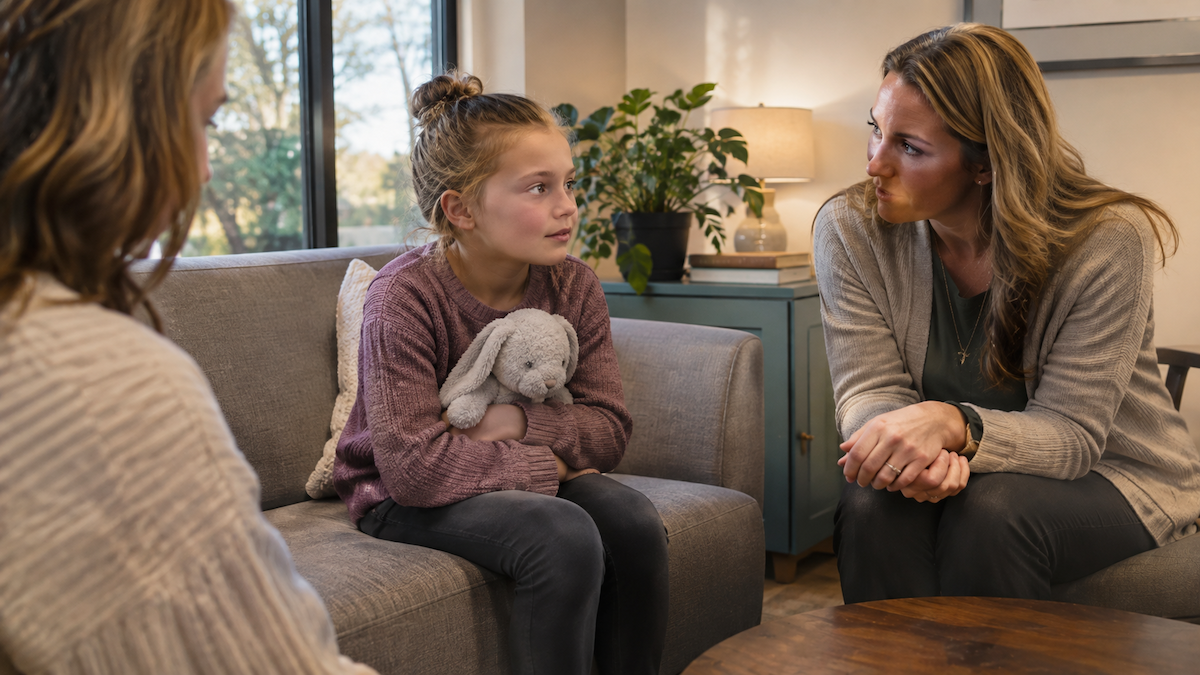
Some children worry about everyday things and shake it off within a few minutes. Others seem to carry a knot of worry around with them, asking the same questions over and over, resisting school mornings, or needing constant reassurance that everything is going to be okay. If that second description sounds familiar, you may be wondering whether what you are seeing is simply a phase or something closer to anxiety in children. This guide walks through common signs of childhood anxiety, what tends to be behind it, and how to think about whether it might help to talk with a licensed counselor.
Quick Summary
Anxiety does not always look like worry on the surface. In children especially, it often shows up as a physical complaint, a behavior change, or a mood shift rather than a clearly stated fear. A child dealing with anxiety might describe frequent stomachaches or headaches with no clear medical cause, seem unusually clingy or reluctant to separate from a parent, have trouble falling asleep or wake often during the night, avoid certain places or situations such as school, sleepovers, or new activities, ask the same worried questions repeatedly even after being reassured, or become irritable, tearful, or prone to meltdowns that seem out of proportion to the situation.
Every child shows anxiety a little differently, and a single instance of any of these signs does not necessarily mean anything serious is going on. What tends to matter more is the pattern: how often it happens, how intense it is, and whether it is interfering with school, friendships, sleep, or family life.
Worry is a normal and even useful part of growing up. Most children feel nervous before a test, a recital, or a first day at a new school, and that nervousness usually fades once the event passes or becomes familiar. What distinguishes everyday worry from anxiety that may benefit from support is generally the frequency, intensity, and impact of the worry rather than its presence at all.
In short: occasional worry before a specific event is a normal part of childhood. It may be worth talking with a licensed counselor when worry shows up often, feels hard for your child to control, or consistently gets in the way of school, sleep, friendships, or family routines.
There is rarely one single cause behind anxiety in a child, and it is not the result of anything a parent did wrong. Temperament plays a role, since some children are naturally more sensitive to change or new situations than others. Life transitions such as a move, a new school, a change in the family, or even a stretch of world events in the news can also contribute. School and social pressures, including academic expectations, friendship conflicts, or a demanding activity schedule, are common factors as well. Family stress, including tension at home or a parent's own stress, can sometimes be picked up on by children even when adults try to shield them from it.
Understanding general contributors can be useful context, but it is not a substitute for an individual evaluation. A licensed clinician is in the best position to help you understand what may be contributing to your own child's experience.
You do not need a diagnosis or a crisis to start therapy, and that is true for children as much as it is for adults. Many families reach out for an evaluation or a first counseling session simply because they want a better understanding of what their child is experiencing and some practical tools to help. That said, there are times when reaching out sooner rather than later tends to make a real difference, including when worry is interfering with school attendance or performance, when it is affecting friendships or family relationships, when physical symptoms are frequent and a pediatrician has not found a medical explanation, or when your own instincts as a parent are telling you that something beyond an ordinary phase is going on.
If you are ever concerned that your child may be in danger of harming themselves or someone else, that is a different and more urgent situation. In that case, please contact the 988 Suicide and Crisis Lifeline by calling or texting 988, Colorado Crisis Services at 1-844-493-8255 or by texting TALK to 38255, or the National Crisis Text Line by texting HOME to 741741, or call 911 or go to the nearest emergency department.
Child counseling for anxiety looks different depending on a child's age, personality, and needs, which is part of why an individual evaluation matters. Younger children often respond well to play therapy, which uses play as a way to express feelings and work through worries that can be hard to put into words. Older children and teens may work with approaches drawn from cognitive behavioral techniques, which generally focus on noticing anxious thoughts and building practical coping skills. Family involvement is also common, since parents and caregivers often play an important role in supporting a child's progress between sessions. Research suggests that many children find therapy helpful for managing anxiety, though progress looks different for every child and depends on many individual factors. A licensed counselor can help determine which approach may be the best fit.
Cost is a real and understandable concern for many families. Parker Counseling Services accepts a variety of major insurance plans and offers a range of rates, and the team is happy to go over current details, including what your specific plan may cover, when you reach out directly. If cost is a barrier, it can also help to ask your insurance provider's directory about in network options or to look into community mental health resources in your area.
Anxiety in children is common, and noticing the signs early does not mean something has gone wrong. It means you are paying attention. Occasional worry is a normal part of growing up, and it tends to stand out as worth a closer look when it is frequent, intense, or getting in the way of daily life. Seeking help is a sign of strength, not weakness, for parents and children alike, and there is no wrong first step. If you are unsure whether what you are seeing warrants a conversation with a professional, reaching out to a licensed counselor is a reasonable and low pressure way to get clarity.
Children can show signs of anxiety at almost any age, and what anxiety looks like often changes as a child grows. Very young children may show separation anxiety, while older children and teens may describe more specific worries about school, friendships, or performance. A licensed clinician can help assess what is typical for your child's age and development.
Many families explore counseling approaches like play therapy or cognitive behavioral techniques before considering other options, and many children find talk therapy helpful for managing anxiety. Whether medication is appropriate for a particular child is a medical decision that should involve a physician or psychiatric provider, not something to decide without professional guidance.
The clearest signals tend to be frequency, intensity, and impact. Occasional fear tied to a specific event that fades on its own is usually part of normal development. Worry that shows up often, is hard to soothe, or interferes with school, sleep, or relationships is worth discussing with a licensed clinician, who can offer an individual assessment rather than a guess from the outside.
Many insurance plans include some coverage for mental health services, and Parker Counseling Services accepts a variety of major insurance plans. Coverage details vary by plan, so the most reliable next step is to contact the practice directly or check with your insurance provider for current, accurate information.
It often helps to keep the conversation simple, warm, and matter of fact. Many parents find it useful to describe counseling as a place to talk about feelings and learn tools for handling worry, rather than framing it around a problem or punishment. Letting your child ask questions and know what to expect can also ease any nervousness about that first appointment.
If you are noticing signs of anxiety in your child and are not sure what the next step should be, you do not have to figure it out alone. Contact Parker Counseling Services to schedule an appointment and talk with a licensed counselor about what you are seeing.